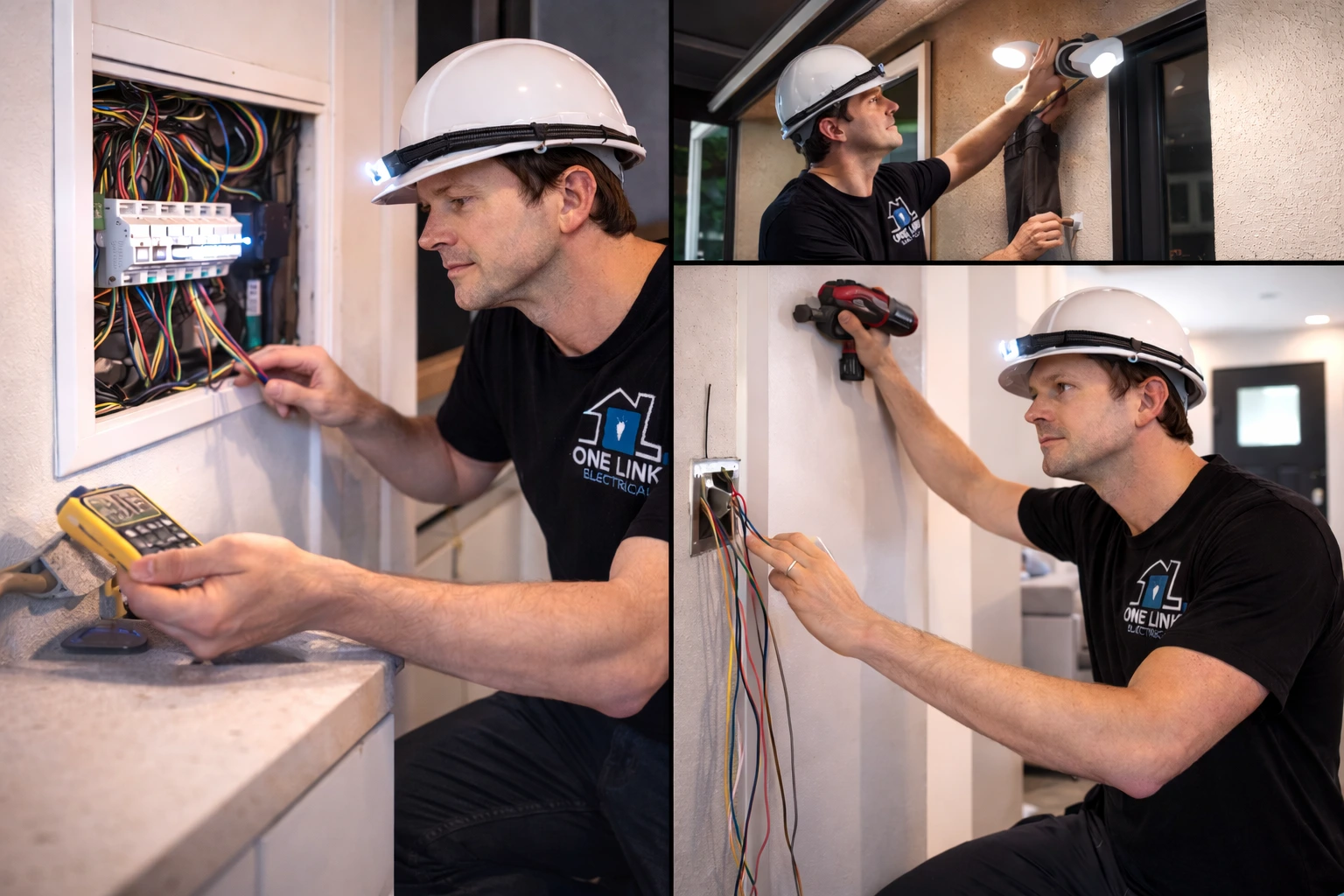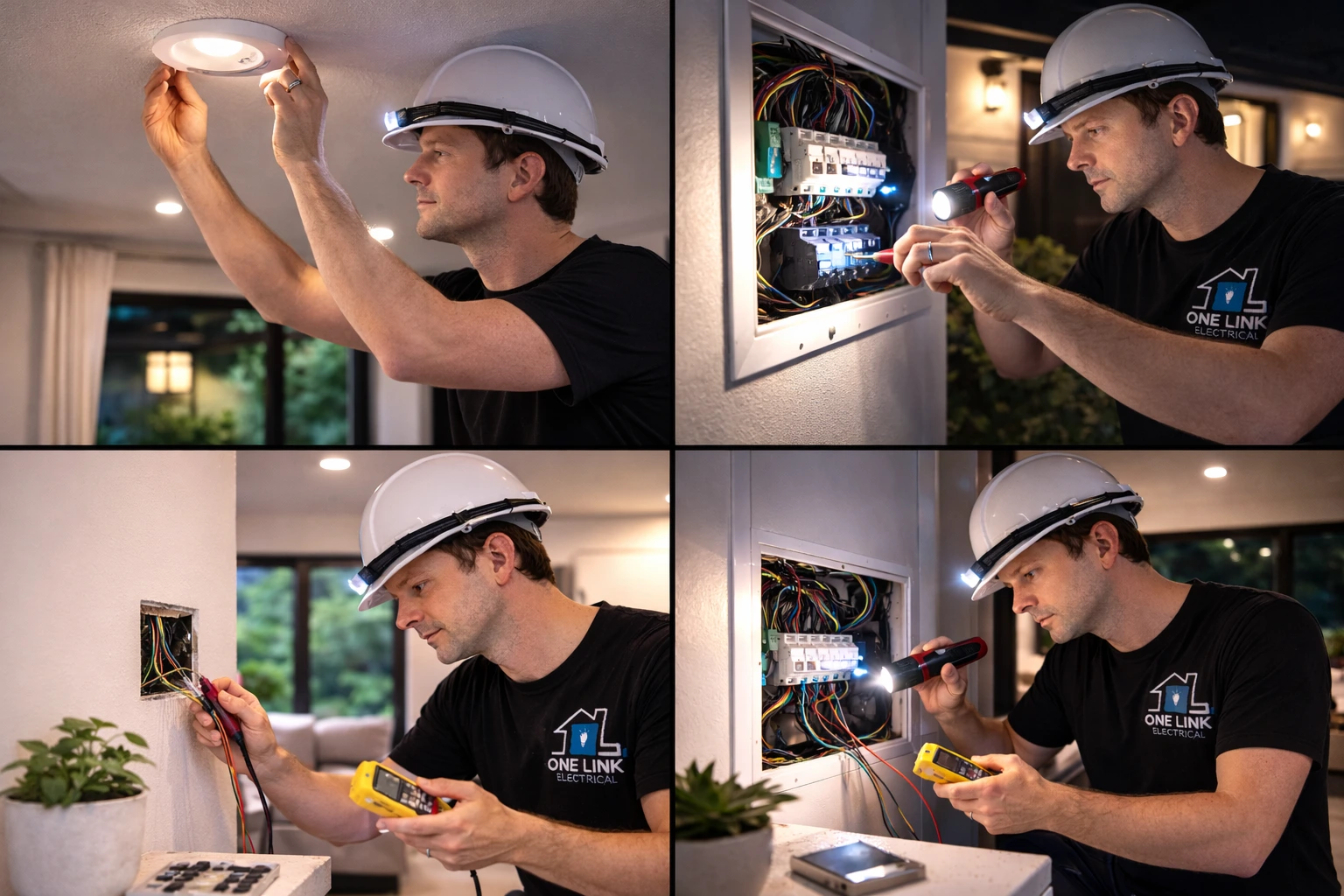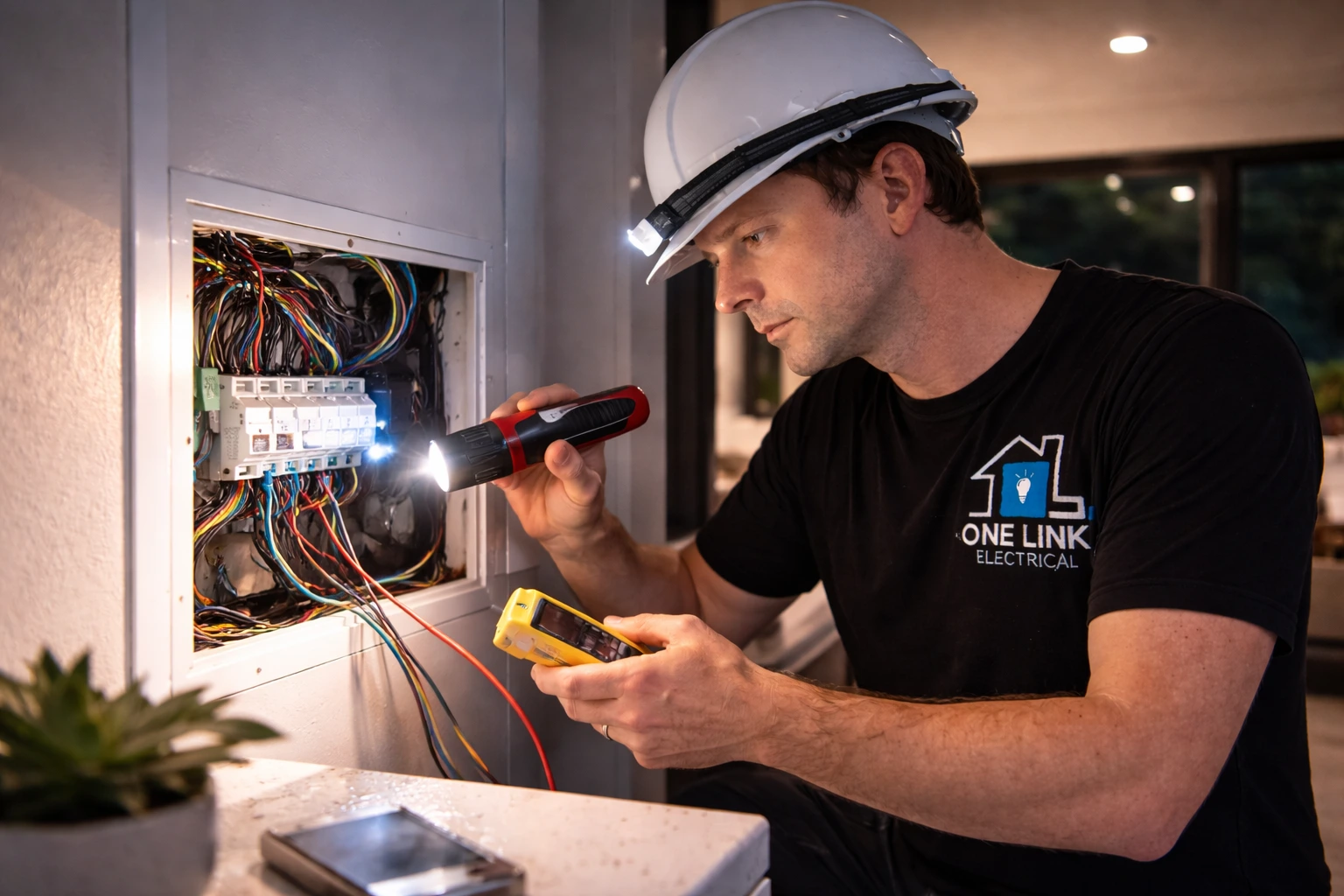

Few things are more frightening than the smell of smoke or the sight of a spark from an outlet in your home. An electrical fire can happen quickly and cause devastating damage. This guide will help you understand how to identify the risks of an electrical fire, what to do in an emergency, and how to keep your Sydney home safe with expert advice.
What to Do Immediately If You Suspect an Electrical Fire
Your first priority is safety. Do not panic. Follow these steps calmly and quickly, as knowing the right actions can prevent a disaster and protect your family.
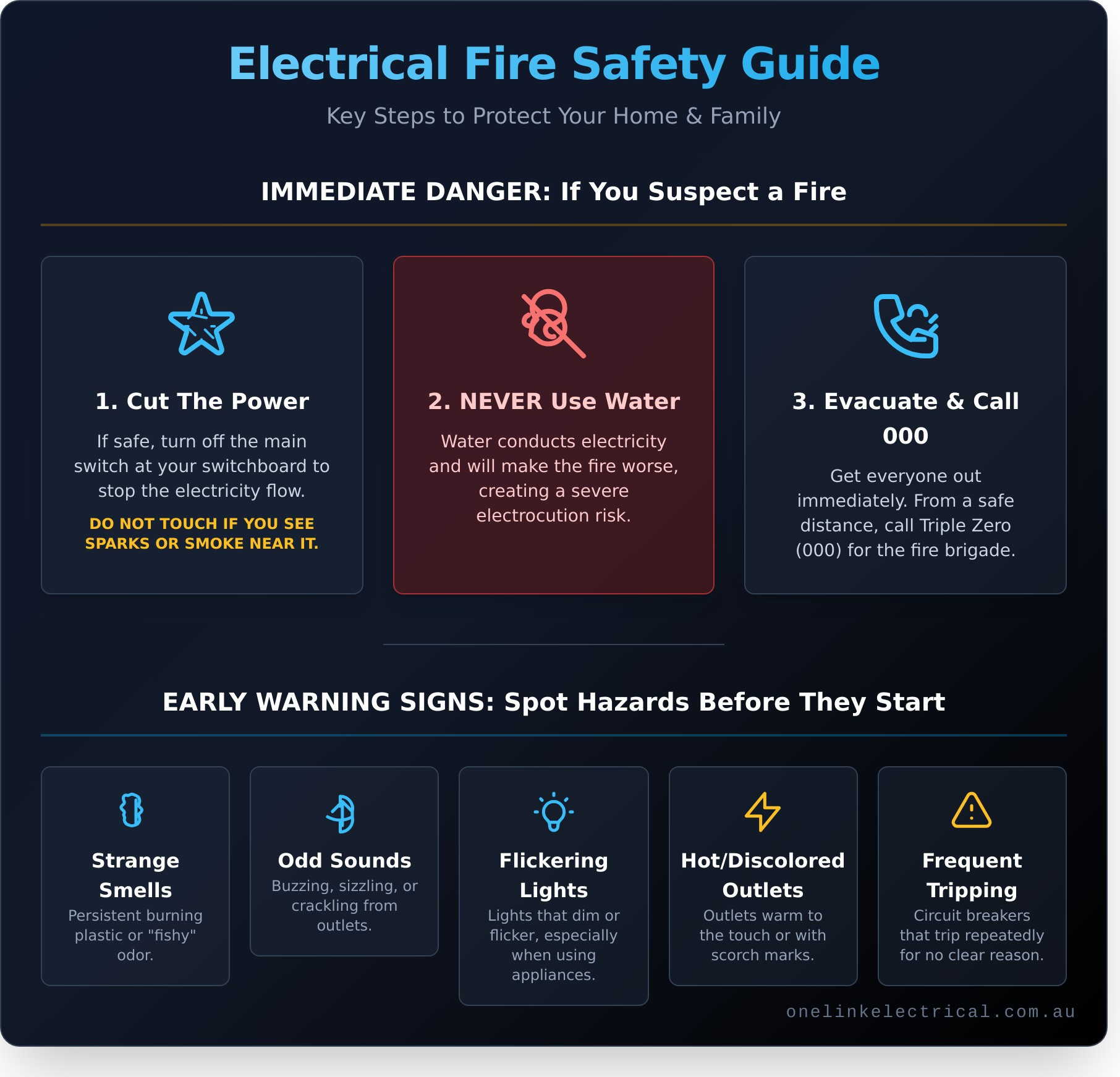
Step 1: Cut the Power (If Safe)
If you can do so safely, go to your switchboard and turn off the main power switch. This action can stop the flow of electricity, which is the source of the electrical fire. However, if you see any smoke, sparks, or flames near the switchboard itself, do not touch it. Your safety comes first.
Step 2: Do NOT Use Water
This is a critical rule: never throw water on an electrical fire. Water conducts electricity and will make the fire much worse. Attempting to use water can lead to severe electrocution and can cause the fire to spread rapidly.
Step 3: Evacuate and Call Triple Zero (000)
Get everyone out of the house immediately. Do not stop to collect belongings. Once you are at a safe distance from the property, call 000 and ask for the fire brigade. After you have alerted emergency services and ensured everyone is safe, you should call a 24/7 emergency electrician to assess the situation once the immediate danger has passed. Call One Link Electrical 24/7 for emergency help.
Top 7 Causes of Electrical Fires in Sydney Homes
Understanding the common risks is the first step in effective prevention. Many electrical fires are entirely preventable with proper awareness and professional maintenance.
1. Faulty and Outdated Wiring
Many older Sydney homes contain wiring that has degraded over time. Wires can become frayed, brittle, or chewed by pests, creating a serious risk of an electrical arc that can ignite surrounding materials like insulation or timber framing. If you have frequently blown fuses or tripping circuits, it could be a sign of outdated wiring.
2. Overloaded Power Boards and Circuits
Plugging too many high-power appliances into a single circuit or power board is a leading cause of electrical fires. Power boards are designed for convenience, not as a permanent wiring solution. You should never “daisy-chain” power boards or extension cords by plugging one into another, as this can cause them to overheat and ignite.
3. Damaged Electrical Appliances and Cords
A frayed power cord or a faulty appliance can overheat in seconds. It’s essential to regularly inspect the cords on your devices for any signs of damage, such as cracks or exposed wires. If an appliance sparks, smokes, or emits a strange smell during use, unplug it immediately and stop using it.
4. Incorrectly Installed Lighting
Using a light bulb with a higher wattage than the fixture is rated for can cause dangerous overheating. Another common hazard is poorly installed downlights that are too close to ceiling insulation or timber beams. For your safety, always ensure that all lighting is installed by a licensed and qualified electrician.
Warning Signs: How to Spot an Electrical Hazard
Your home’s electrical system will often give you warning signs before a critical failure occurs. Paying close attention to these red flags is key to preventing an electrical fire before it starts.
Strange Smells and Sounds
A persistent burning smell, often described as a fishy or acrid plastic odour with no obvious source, is a major warning sign of a dangerous electrical fault. You should also listen for any buzzing, sizzling, or crackling sounds coming from your power outlets or switches, as this can indicate a dangerous electrical arc is occurring within your walls.
Visual Cues to Watch For
Keep an eye out for visual clues that point to a problem. This includes lights that flicker or dim, especially when you turn on a large appliance like a microwave or air conditioner. Check your power outlets for any discolouration, scorch marks, or if they feel warm to the touch. Another key indicator is a circuit breaker that trips repeatedly without a clear reason.
The Critical Role of Your Safety Switch (RCD)
A modern safety switch, also known as a Residual Current Device (RCD), is your home’s best line of defence against both electrocution and fire. It is designed to detect even the smallest electrical fault and cut the power in milliseconds-far faster than a traditional fuse or circuit breaker. You should test your safety switch every few months by pressing the ‘test’ button to ensure it’s working correctly. If your switchboard is old or doesn’t have an RCD, an upgrade is a vital investment in your family’s safety. Need a switchboard check or upgrade? Contact our experts.
Frequently Asked Questions About Electrical Fires
What does an electrical fire smell like?
An electrical fire often has a distinct, acrid smell similar to burning plastic or a “fishy” odour. If you notice this smell and can’t identify the source, it’s crucial to investigate your electrical system immediately.
Can an electrical fire start if nothing is plugged in?
Yes. A fire can start due to faulty wiring within the walls, a malfunctioning circuit breaker, or a damaged outlet, even if no appliances are actively plugged in at that moment.
How do you put out a small electrical fire?
If the fire is very small and you can safely do so, use a Class C or multipurpose dry chemical fire extinguisher. Never use water. If you have any doubt, evacuate immediately and call 000.
Is it safe to stay in a house after a small electrical fire?
No. Even after a small fire is extinguished, you must have the electrical system inspected by a licensed emergency electrician to find and fix the underlying fault. It is not safe to restore power until a professional has declared it safe.
How often should I get my home’s wiring inspected?
It is recommended to have your home’s electrical system inspected by a licensed electrician every 5 years, or immediately if you move into a new property, especially if it’s an older home.
Protecting your home and family from the risk of an electrical fire starts with awareness and proactive maintenance. If you notice any of the warning signs discussed or have any concerns about your home’s electrical safety, do not hesitate. A small issue can escalate quickly. Suspect an electrical fault? Call our 24/7 emergency electricians now. Our licensed and 5-star rated Sydney experts are ready to provide immediate assistance with a $0 call-out fee, ensuring your home is safe and secure.