Protecting your home and family from a fire starts with one simple, crucial device: a working smoke detector. But with different types available and specific laws to follow, it can be confusing to know if you’re truly covered. This guide will walk you through the different types of smoke detectors, the legal requirements in NSW, and why professional installation is the only safe choice for your family’s safety.
What is a Smoke Detector and Why is it Essential?
A smoke detector, also known as a smoke alarm, is your first line of defence against a house fire. It’s a small electronic device that detects smoke, providing a loud, early warning that gives you and your family critical time to escape. Fires can start silently and spread rapidly, especially at night when you’re asleep. A properly installed and maintained smoke alarm acts as your 24/7 guard, constantly monitoring the air for danger.
In New South Wales, having at least one working smoke alarm is not just a good idea—it is a legal requirement in all homes, apartments, and rental properties. Failing to comply can put lives at risk and may have serious legal and insurance consequences.
Types of Smoke Detectors: Which One Do You Need?
Not all smoke alarms are the same. The two main types work differently to detect fires, and understanding these differences is key to choosing the right protection for your home.
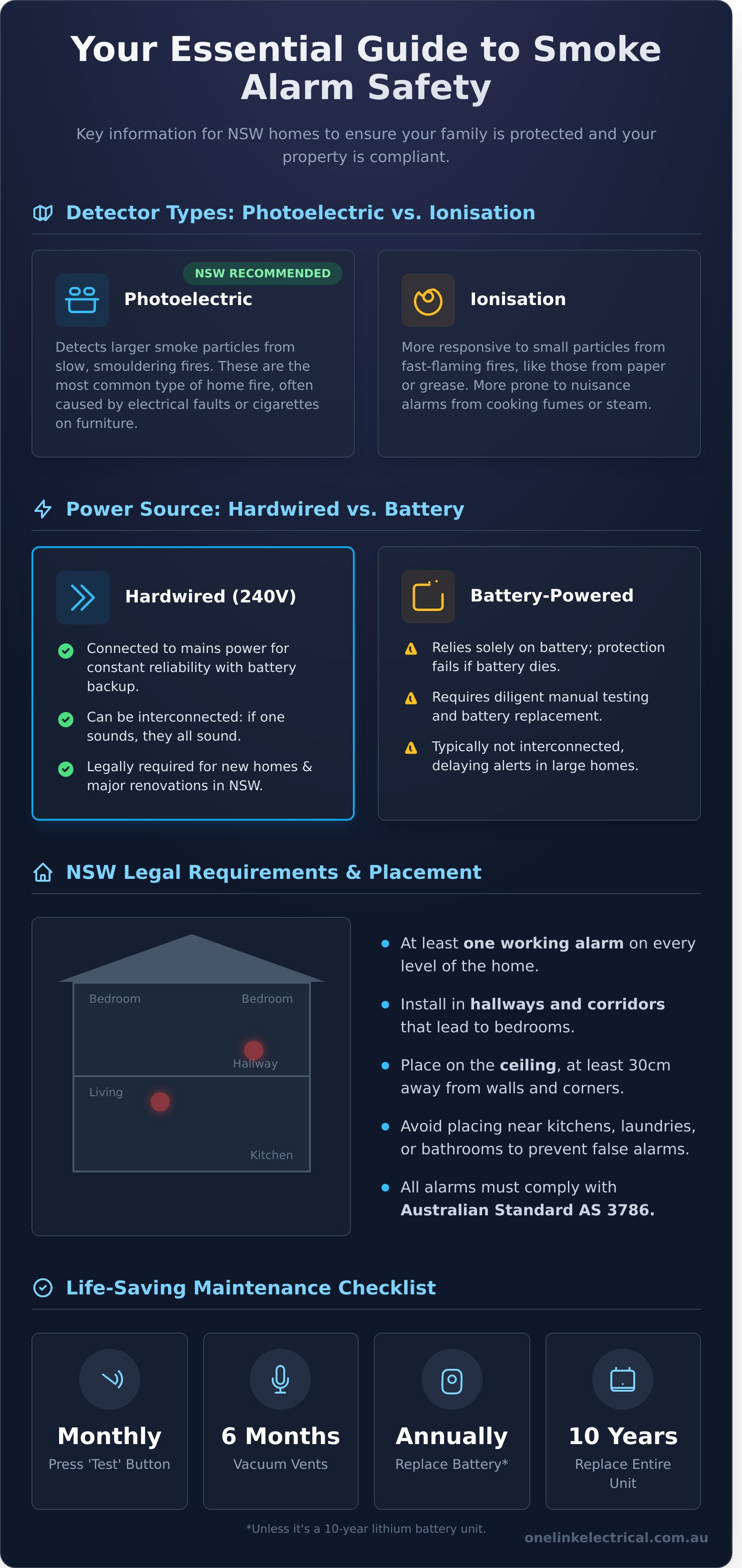
- Photoelectric Alarms: These are the most common type and are best for detecting slow, smouldering fires, which can burn for hours before bursting into flames. These fires, often started by cigarettes on furniture or electrical faults, are the most frequent type in homes.
- Ionisation Alarms: This type is more responsive to fast-flaming fires with smaller particles of smoke, such as those caused by flammable liquids or paper.
- Dual Sensor Alarms: For the most comprehensive protection, dual sensor alarms combine both photoelectric and ionisation technologies into a single unit.
- Smart Smoke Alarms: These modern alarms connect to your home’s Wi-Fi and can send alerts directly to your smartphone if smoke is detected, giving you peace of mind even when you’re away.
| Feature | Photoelectric Alarm | Ionisation Alarm |
|---|---|---|
| Best For | Smouldering fires (e.g., electrical, furniture) | Fast-flaming fires (e.g., paper, grease) |
| Sensitivity | Detects larger smoke particles | Detects smaller smoke particles |
| Common Nuisance Alarms | Less likely from cooking fumes | More likely from burnt toast or steam |
Hardwired vs. Battery-Powered Smoke Alarms
Your smoke alarm’s power source is just as important as its detection technology. While battery-powered alarms are easy to install, they rely entirely on you remembering to check and change the batteries. A forgotten battery can have devastating consequences.
Hardwired (240V) smoke alarms are professionally connected to your home’s mains power, ensuring they always have a reliable power source. They also contain a battery backup to keep them working during a power outage. For superior safety, hardwired alarms can be interconnected, so if one alarm detects smoke, all alarms throughout the house will sound simultaneously. NSW legislation requires hardwired, interconnected smoke alarms in all new homes and renovations.
Smoke Alarm Rules in NSW: A Simple Guide
Understanding the Smoke Alarm law is the first step to ensuring your home is both safe and compliant. The regulations can vary depending on whether you are a homeowner, landlord, or building a new property, but the goal is always the same: to save lives.
Legal Requirements for Homeowners in Sydney
For existing homes, the law requires at least one working smoke alarm to be installed on every level. This includes owner-occupied homes, rental properties, relocatable homes, and caravans. All smoke alarms must comply with Australian Standard AS 3786. If you are building a new home or undertaking a major renovation, the requirements are stricter, demanding interconnected, mains-powered alarms. Not sure if you comply? It’s always best to have a professional check. Get a safety check today.
Where to Install Smoke Detectors for Maximum Safety
Correct placement is critical for early detection. A licensed electrician will install alarms according to these best practices:
- In hallways and corridors that lead to bedrooms.
- On every level of your home, including habitable attics and basements.
- On the ceiling, at least 30cm away from any wall or corner.
- Placement should avoid kitchens, laundries, and bathrooms, where steam and cooking fumes can cause frustrating false alarms.
Testing and Maintenance: A 5-Minute Safety Habit
An alarm can’t protect you if it isn’t working. Follow this simple routine to keep your smoke detectors in life-saving condition:
- Test monthly: Press the ‘test’ button on each alarm for a few seconds until you hear the beep.
- Clean every six months: Gently vacuum around the alarm vents with a soft brush attachment to remove dust and cobwebs.
- Replace batteries annually: Unless you have a unit with a 10-year lithium battery, change the batteries every year on a memorable date, like New Year’s Day.
- Replace the entire unit every 10 years: Smoke alarms have a limited lifespan. By law, they must be replaced every 10 years. The expiry date is usually printed on the unit.
Why You Need a Licensed Electrician for Smoke Alarm Installation
While you can install a battery-powered alarm yourself, the installation of any hardwired (240V) smoke alarm is strictly not a DIY job. It involves working with your home’s electrical wiring, which can be extremely dangerous. A licensed electrician is required by law to perform this work, ensuring your system is both safe and legally compliant.
Guaranteed Compliance and Correct Placement
A qualified electrician from One Link Electrical understands the exact requirements of the NSW building codes and Australian Standards. We ensure your alarms are installed in the optimal locations for the earliest possible detection, giving you a certificate of compliance and total peace of mind that your family is protected.
Safe Interconnection of Multiple Alarms
The most important safety feature of a modern alarm system is interconnection—if one alarm sounds, they all sound. This is particularly crucial in larger or multi-storey homes, ensuring that an alarm in the basement can be heard in an upstairs bedroom. Our licensed electricians can safely wire multiple alarms together, creating a comprehensive safety net for your property. Protect your entire home. Book a professional installation now.
Don’t leave your family’s safety to chance. A correctly installed and maintained smoke alarm system is the most important safety device in your home. At One Link Electrical, our licensed and insured electricians are available 24/7 to ensure your home is fully protected and compliant. With a $0 call-out fee, we make it easy to get the job done right the first time. Book Your Smoke Alarm Installation & Safety Check Today and gain the peace of mind you deserve.