Ceiling fans remain one of the most energy-efficient and cost-effective ways to keep your home comfortable all year round. At One Link Electrical, homeowners often ask, “What’s the real cost to run a ceiling fan?” The answer depends on several key factors — from the fan’s wattage and usage time to your electricity rate. Let’s explore how much a ceiling fan really costs to operate and what you should know before installation.
- Understanding Ceiling Fan Power Consumption
- Factors Affecting the Cost to Run a Ceiling Fan
- How to Calculate the Ceiling Fan Running Cost
- Comparing Ceiling Fans to Other Cooling Options
- How Much Electricity Does a Fan Use?
- Does a Ceiling Fan Use a Lot of Electricity?
- Ceiling Fan Installation Costs Explained
- Energy-Efficient Fan Tips from One Link Electrical
- Choosing the Right Electrician for Installation
- Final Thoughts – Comfort and Value All Year Round
Understanding Ceiling Fan Power Consumption
A standard ceiling fan typically uses between 30 to 75 watts per hour, depending on its speed and motor size. To put that into perspective, many air conditioners consume over 2000 watts per hour. This means running a ceiling fan can cost just a fraction of what cooling your home via air conditioning does.
If you run your fan for eight hours a day at an average electricity rate of around 30 cents per kWh, it generally costs less than 20 cents per day — a tiny price for continuous comfort.
Factors Affecting the Cost to Run a Ceiling Fan
The total ceiling fan running cost depends on several variables:
- Wattage: The higher the wattage, the more energy it consumes.
- Fan size: Larger blades move more air but can slightly increase power use.
- Speed setting: Using higher speeds draws more power.
- Motor efficiency: Energy Star-rated fans consume significantly less power.
- Electricity tariff: Local energy rates influence your final running cost.
Even though these factors vary, ceiling fans remain one of the most efficient fixtures in any home.
How to Calculate the Ceiling Fan Running Cost
Calculating the cost to run a ceiling fan is simple with this formula:
Power (kW)×Hours used per day×Electricity rate (per kWh)
=Daily Running CostPower (kW)×Hours used per day×Electricity rate (per kWh)
=Daily Running Cost
For example, an average fan using 0.05 kW for 8 hours, at $0.30 per kWh, will cost:0.05×8×0.30=$0.12 per day0.05×8×0.30=$0.12 per day
That’s roughly $3.60 per month — cheaper than running a light bulb continuously.
Comparing Ceiling Fans to Other Cooling Options
When comparing cooling options, ceiling fans stand out for affordability and efficiency:
- Air conditioners can cost $1 to $3 per hour to run.
- Portable coolers can consume 150 to 500 watts on average.
- Ceiling fans, by contrast, cost only a few cents per hour.
By circulating air effectively, ceiling fans allow you to raise your thermostat’s temperature without sacrificing comfort. Even when used alongside air conditioning, they help lower energy costs significantly.
How Much Electricity Does a Fan Use?
A common question homeowners ask is, “How much electric does a fan use?” The answer depends on its wattage and how long it operates.
On average:
- Small ceiling fans: 25–40 watts
- Medium fans: 45–60 watts
- Large or high-performance fans: 70–100 watts
This puts fans among the most energy-efficient household devices you can install. Using them strategically during warmer months can lower total energy bills by 10–15%.
Does a Ceiling Fan Use a Lot of Electricity?
No — ceiling fans do not use a lot of electricity. In fact, compared to most household appliances, their power consumption is minimal. Modern ceiling fans, especially those fitted with DC motors, use up to 70% less electricity than older AC motor models.
One Link Electrical often recommends DC fans to customers seeking long-term savings and quiet performance. These fans are eco-friendly and ideal for homes looking to reduce their carbon footprint.
Ceiling Fan Installation Costs Explained
You might also wonder, “How much does ceiling fan install cost?” Installation prices depend on whether wiring already exists or if new cabling is required.
Typical ceiling fan installation costs can range:
- Basic replacement (existing wiring): Starting from $150–$250
- New installation (no existing wiring): Typically $300–$500+, depending on ceiling height and fan design
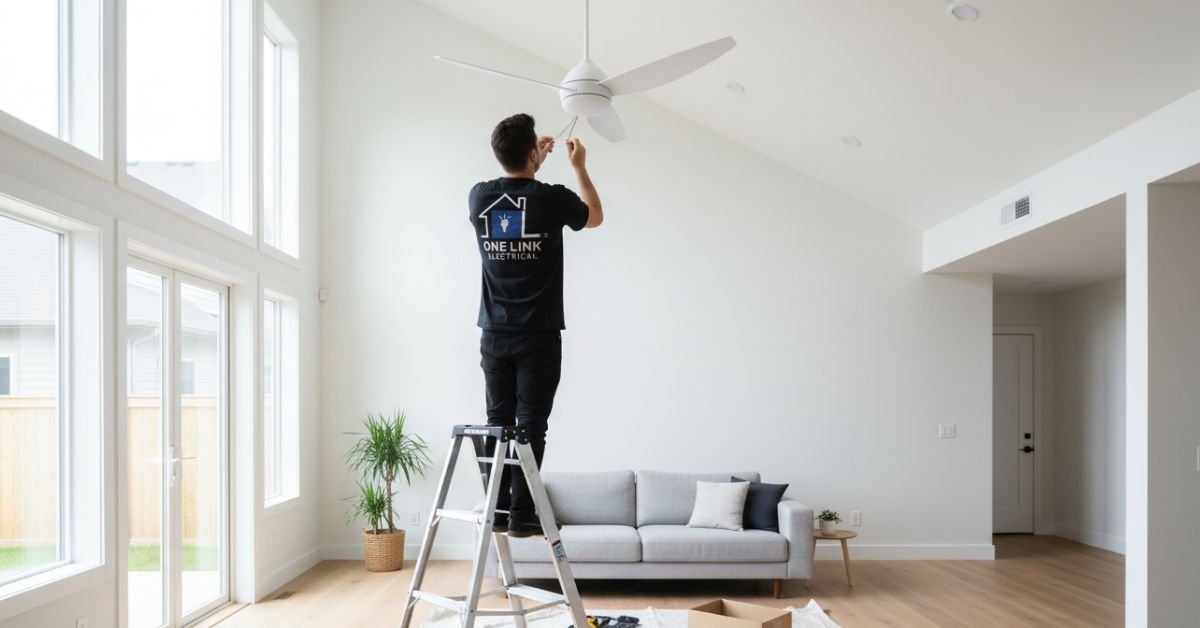
Professional installation ensures your fan operates safely and efficiently. One Link Electrical’s qualified electricians are experienced in ceiling fan installations and can help you choose the right model for your space.
Energy-Efficient Fan Tips from One Link Electrical
To minimise your ceiling fan running cost, consider these simple tips:
- Use the reverse setting during winter to circulate warm air.
- Clean the fan blades regularly to maintain airflow efficiency.
- Turn off fans when leaving a room.
- Install an energy-efficient LED light kit if your fan includes lighting.
- Choose fans with DC motors and Energy Star ratings for maximum savings.
Small habits make a big difference over time in reducing your household’s total electricity consumption.
Choosing the Right Electrician for Installation
When it comes to installing or upgrading your ceiling fans, selecting a licensed electrician is essential. One Link Electrical provides professional ceiling fan installation services tailored to your home’s electrical layout. Our team ensures fans are wired securely, balanced properly, and compliant with Australian electrical standards.
Whether you need a simple replacement or a completely new installation, our certified electricians guarantee a safe, reliable, and efficient result.
Final Thoughts – Comfort and Value All Year Round
The cost to run a ceiling fan is remarkably low, offering exceptional comfort for minimal expense. With professional installation from One Link Electrical, you can enjoy efficient airflow year-round without worrying about high energy bills.
If you’re considering a new ceiling fan or checking your current setup’s efficiency, our team is ready to assist. One Link Electrical provides expert advice, affordable installation, and dependable service to make your home cooler, safer, and more energy efficient.